Tuscan Wedding Menu
A Tuscan wedding menu is six courses in a fixed order: aperitivo, antipasto, primo, secondo, contorni, cake. What varies is not the structure but the content: the season decides the vegetables, the fruit and half the antipasto, which is why a May wedding and a September wedding should not be served the same food.
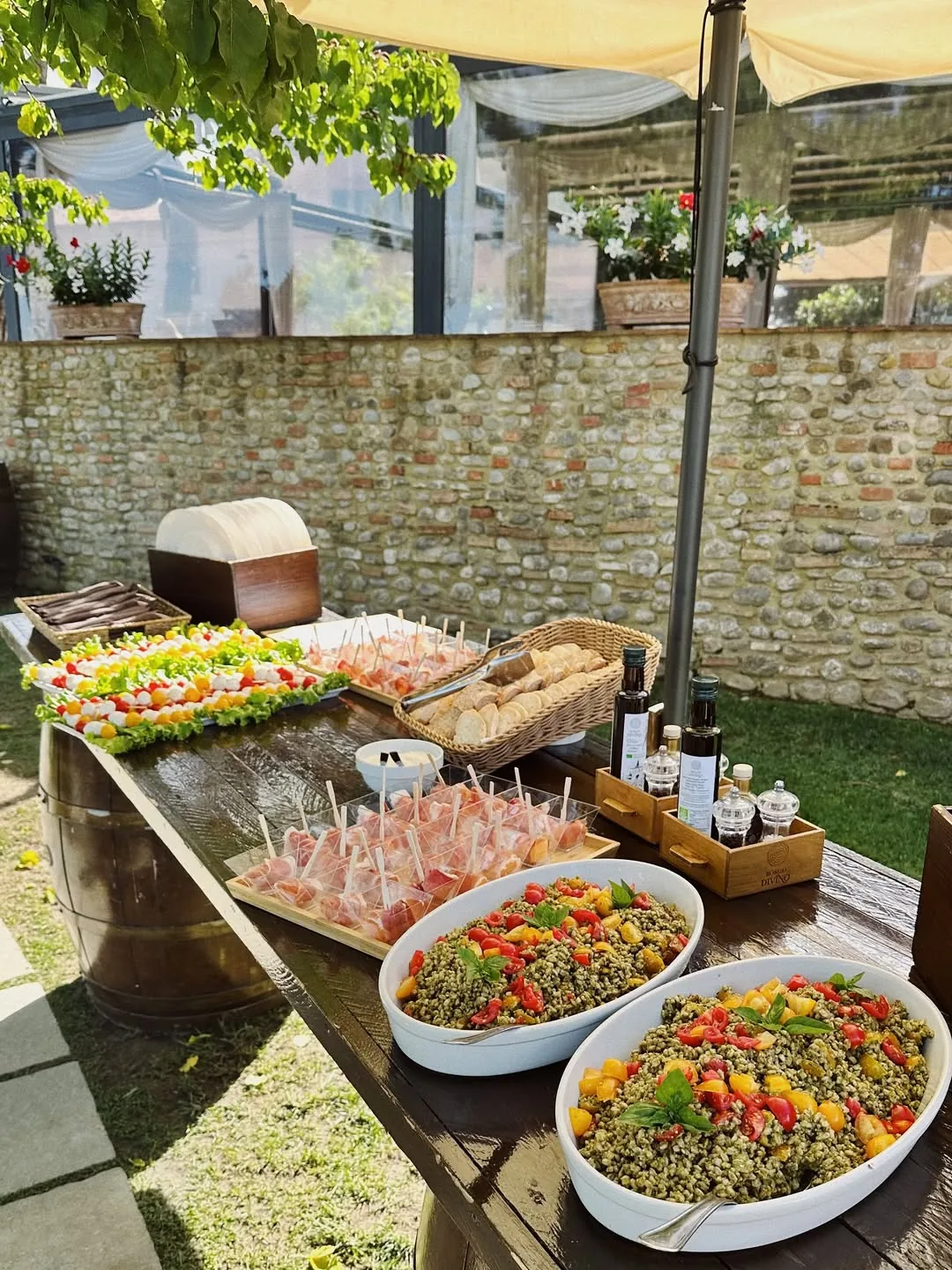
The six courses of an Italian wedding menu, and what belongs in each
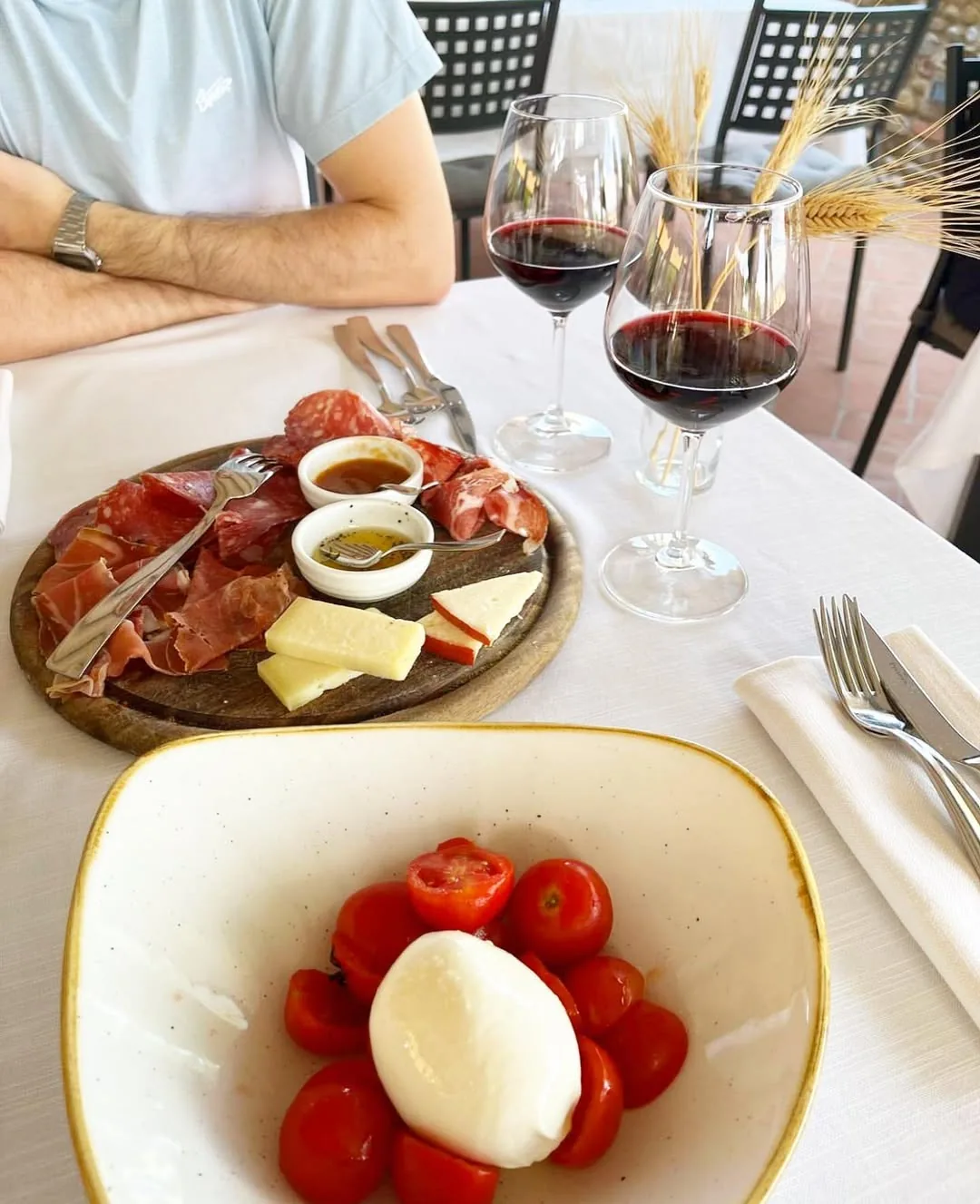
The aperitivo happens outside while the light is still high, and it needs to be food people can eat standing with a glass in the other hand: crostini di fegatini, pecorino di Pienza with honey, marinated vegetables, prosecco. Forty-five minutes to an hour is right, long enough for everybody to arrive, short enough that nobody gets hungry-drunk before they sit.
The antipasto is Tuscan cured meats and focaccia baked that morning. The primo is where the wedding either becomes memorable or does not: hand-rolled pici or tagliatelle, ideally made in front of the guests. The secondo is slow-braised Chianina or sea bass al cartoccio; the contorni are whatever the garden actually had. Then the cake, assembled tableside, with vin santo.
What changes with the season
May and June: asparagus, broad beans, the first courgette flowers, strawberries. The food is lighter and greener, and the aperitivo can run longer because the evening is cool.
July and August: tomatoes worth building a course around, peppers, aubergine, peaches. This is when the antipasto gets its best material and when you want more of the meal outdoors and less of it in a hot room.
September and October: porcini if we are lucky, grapes, figs, the first game. The richest menus of the year, and my favourite month to cook a wedding: the produce is at its best and the heat has stopped fighting the kitchen.
The two things couples most often get wrong
- Too many courses. Seven courses sounds generous and eats like an endurance test. Six is the ceiling; five done properly beats seven done thinly, and it costs less.
- A primo that arrives from a kitchen nobody can see. The pasta course is the emotional centre of an Italian meal. Rolling it in front of your guests costs nothing and is the single thing they will still describe to people a year later.
- Ignoring the gap. Between the ceremony and the meal there is always a gap. Fill it with the aperitivo or your guests will remember being hungry, whatever you serve afterwards.
Cooking your wedding, not just writing about it.
I cook weddings of up to 200 guests in the Tuscan countryside every season. If you want the food handled by the person who wrote this, get in touch.
Ask about wedding catering in TuscanyQuestions, answered.
What food is served at a Tuscan wedding?
Tuscan wedding food follows the everyday cooking of the region rather than a separate "wedding" cuisine: crostini and cured meats at the aperitivo, a hand-rolled pasta as the primo, slow-braised Chianina beef or sea bass as the secondo, garden vegetables as contorni, and a cake finished with vin santo. The food is simple and seasonal by design — what makes it a wedding is the quality of the produce and the fact that the pasta is rolled in front of the guests, not elaboration.
How many courses should a Tuscan wedding menu have?
Five to six. Seven is technically possible and almost always a mistake: guests stop enjoying food they cannot finish. Five courses cooked properly will be remembered far better than seven stretched across the same budget.
What is served at a Tuscan wedding aperitivo?
Crostini di fegatini (chicken liver pâté on toasted bread), pecorino di Pienza with honey or fruit preserve, Tuscan cured meats, marinated seasonal vegetables and prosecco. Everything has to be edible one-handed while holding a glass.
Can a Tuscan wedding menu work for a vegetarian wedding?
Very easily: Tuscan cooking is built on beans, bread, vegetables and olive oil, and the meat is a relatively recent luxury on top of it. A fully vegetarian Tuscan menu is authentic rather than a compromise, which is not true of every regional cuisine.
When should we finalise the menu?
Structure at booking, specifics about six weeks out, and the vegetables essentially on the week. Locking every ingredient a year ahead guarantees you serve something that was not at its best on the day.